
The ancient city of Taxila in Pakistan has its name cemented in history textbooks like few other places in the region have. Taxila has experienced the reigns of numerous empires and hosted inhabitants of various ethnic and religious backgrounds, leaving behind impressive remains from different eras. For this reason, the archeological sites of Taxila are a must-visit tourist attraction if you spend more than a day in Islamabad.
However, traveling to Taxila independently (meaning without locals to guide you around) can be a little challenging especially for travelers who are new to Pakistan. From the transportation to Taxila to getting around the sites themselves, things can be a bit more difficult than expected.
Fortunately, I’m here to help. I recently visited Taxila independently from Islamabad and I’m here to share my experience with you. I’ll share exactly what tourists should expect when visiting Taxila and what things to be aware of so that you can enjoy a worry-free excursion to the ancient remains without a tour guide!

Table of Contents
Pin It For Later!
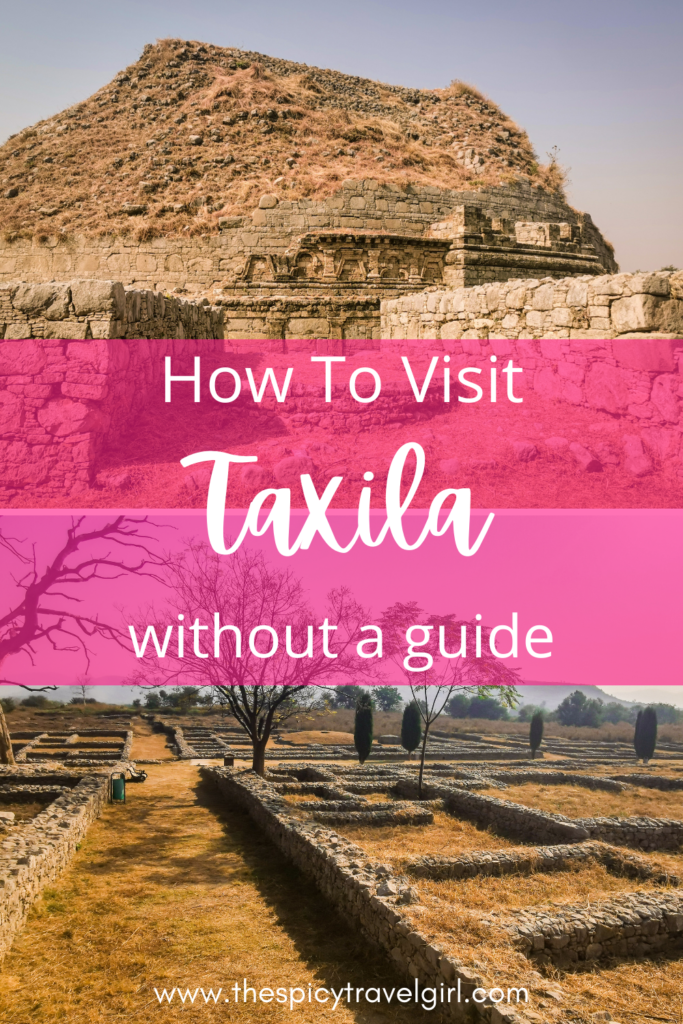


Where Is Taxila?
The ancient remains of Taxila are located in the modern city of Taxila about 30 kilometers outside of Islamabad. Depending on your location and traffic, the drive to Taxila from Islamabad may take between 40 minutes to one hour, making it an easy day trip from Islamabad.
Check out this complete itinerary for a perfect day in Islamabad!
What Is Taxila Famous For?
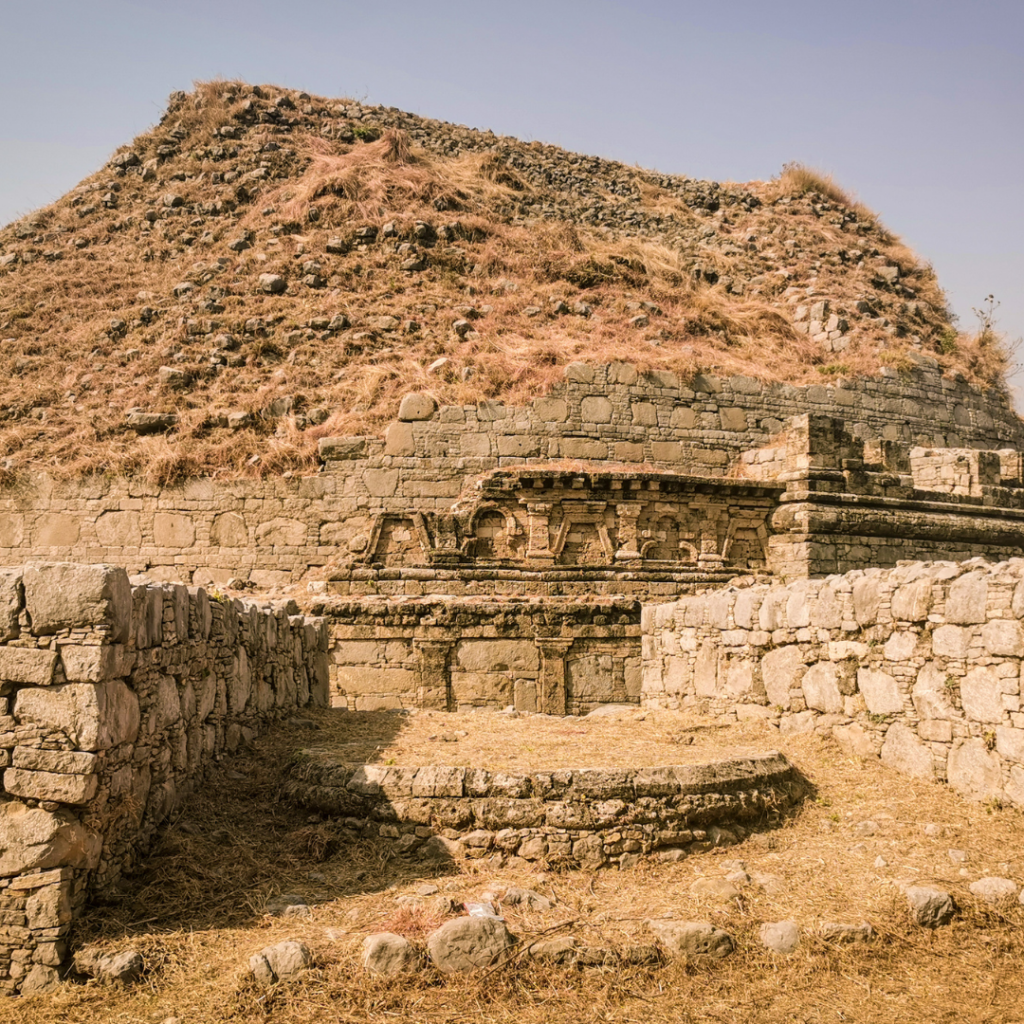
Taxila is famous for its various ancient remains from a multitude of different eras. Throughout its lifetime, Taxila was ruled by many different empires including the Persian Achaemid Empire, the Hellenistic (Greek) Empire, the Indian Mauryan Empire, the Indo-Greek Bactrian, Scythian, and Parthian Kingdoms, the Kushan, and the Gupta. The oldest remains date back to the neolithic era more than 5,000 years ago, while more recent ones are less than 2,000 years old.
This leaves Taxila with a variety of ancient ruins. The major archeological sites include:
Sirkap: The second city site of ancient Taxila founded by Bactrian King Menander consisting of the remains of four super-imposed periods: Pre-Greek, Greek, Scythian, and Parthian. The city was well fortified and populated over millennia and has accumulated a variety of cultural and religious elements, including Christian churches, Buddhist stupas, and Jain temples.
Dharmarajika: A large Buddhist stupa built by Mauryan King Ashoka in the second century BC. It houses a Buddha tooth relic and an ancient monastery, making it a pilgrimage destination for Buddhists from around the world.
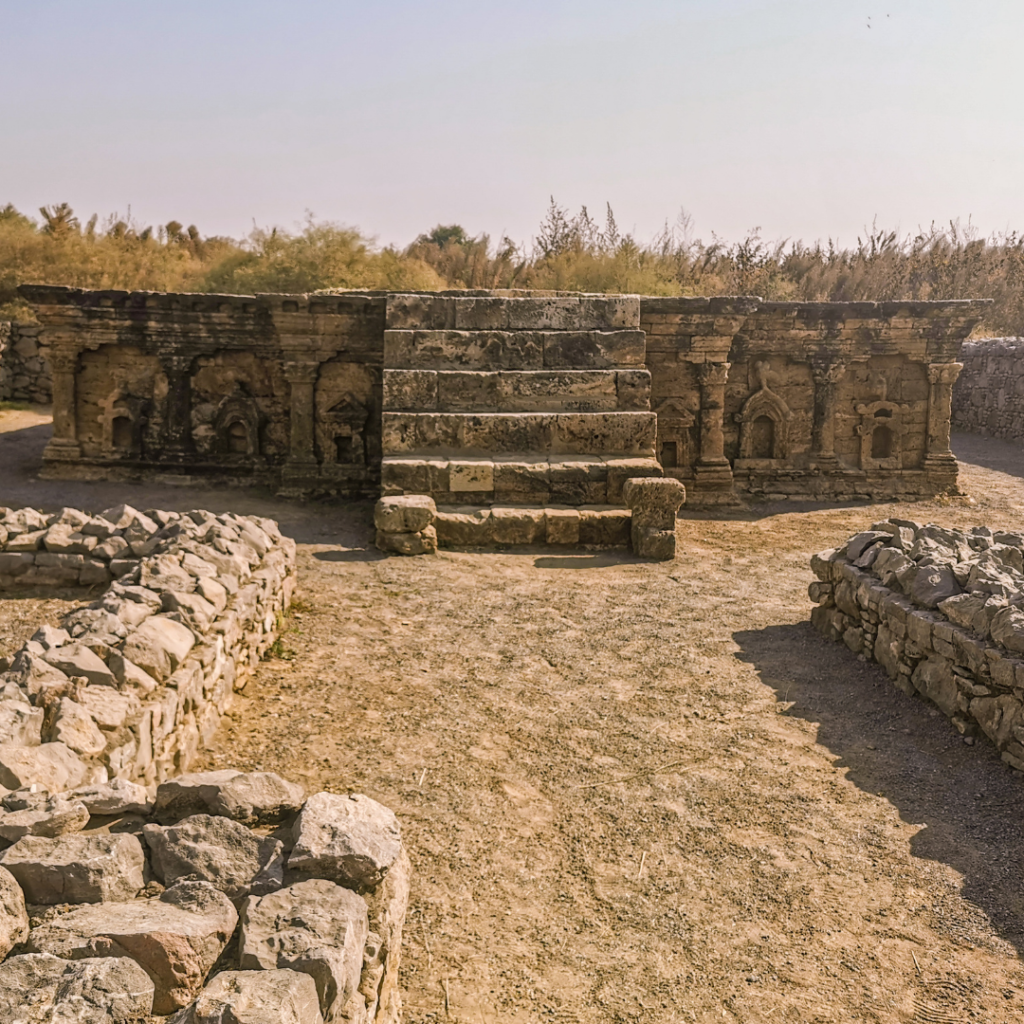
Mohra Moradu: Another Buddhist complex consisting of a stupa and a monastery, established by Kushan King Kanishka in the first century AD. Its location outside of the city provided a quiet environment for meditation.
Taxila also used to have one of the world’s oldest university. However, this ancient Taxila University no longer exists.
Why Is Taxila Important?
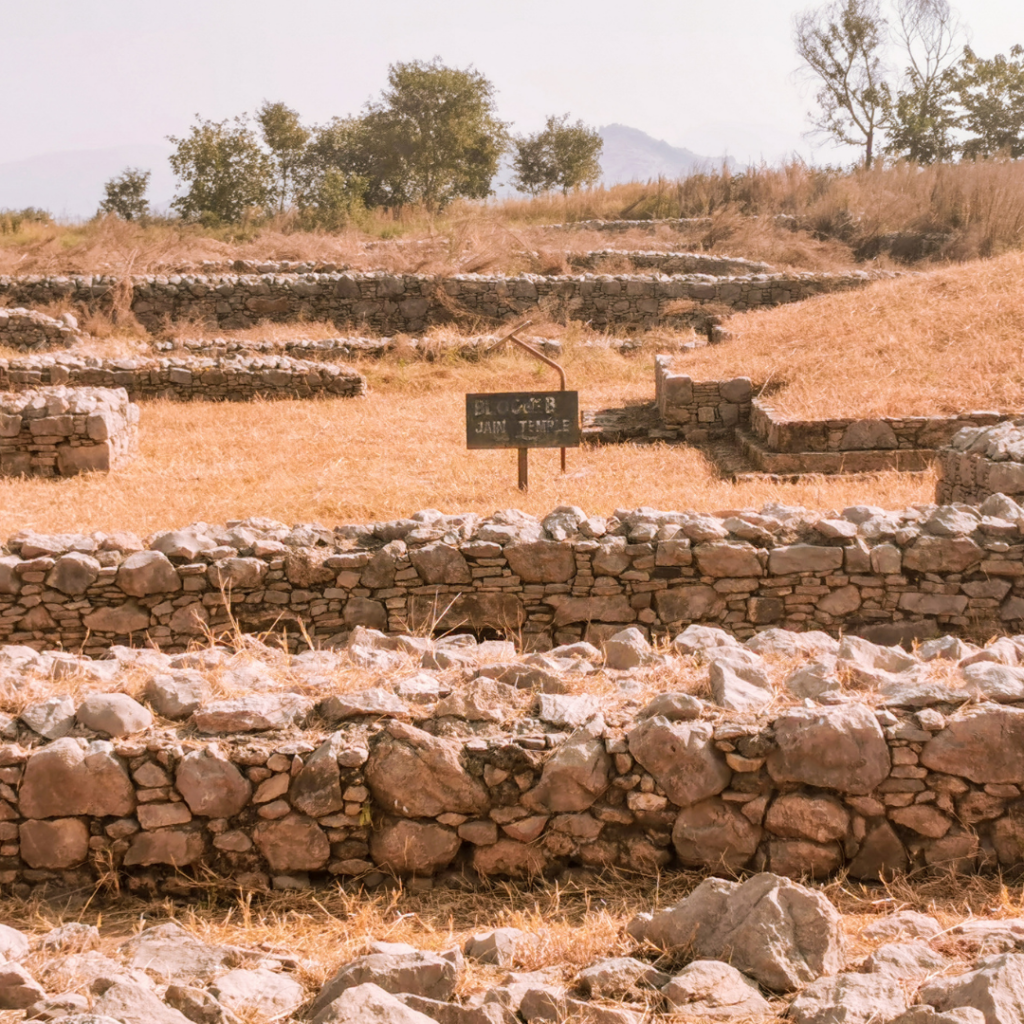
According to UNESCO, Taxila showcases the patterns of urban evolution in a way no other city in the Indian subcontinent does due to the continuous settlement through more than five centuries1. This unique history helped the site gain UNESCO World Heritage Status in 1980.
How To Get To Taxila From Islamabad
By Van
Going by van is the cheaper but less convenient way of getting to Taxila from Islamabad for not much more than 50 rs (~ $0.30 USD), per person! Vans leave from Rawalpindi Railway Station and take about an hour to reach Rawalpindi. Keep in mind that local vans are not recommended for solo female travelers.
Read more: Is Pakistan Safe For Women Travelers? Here’s What It’s REALLY Like
By Car
The easiest and most convenient way to get to Taxila from Islamabad is by car. Simply call a Careem from your location to Taxila Museum. Depending on your location and the time of the day, the ride should cost somewhere between 600 to 1000 rs (very roughly $5 USD) oneway. However, because Careem doesn’t operate in Taxila, it’s strongly advised to have your driver wait for you. Negotiate a fare in advance (it should be no more than 2x the fare that Careem for your ride to Taxila + ~700 rs) and make sure to exchange phone numbers with the driver.
How To Get Around Taxila

Taxila consists of four major sites, including the Taxila Museum, Dharmarajika, Sirkap, and Mohra Moradu. These sites are quite spread out across the city and there are no shuttle services, leaving visitors with two options to get around Taxila: by car or by foot.
Exploring Taxila by foot may save you a few hundred rupees but will certainly cost you a lot of time. Only attempt it if you have all day to spend in Taxila and beware of the heat in summer.
The best option if you don’t have your own car is to request your Careem driver (who should be waiting for you in Taxila anyway) to drive you to each site. Drivers often charge around 700 rs for all sites but you can negotiate lower prices if you don’t intend to visit all sites. The caretakers at the entrance by the museum speak good English and can assist you with these things.
Things To Keep In Mind While Visiting

Opening Hours And Entry Fees
On most days, the archeological complex of Taxila is open from 9 am – 4 pm and there are separate entry fees for the museum and the three archeological sites combined.
The entry fees are the following:
Locals: 20 rs
Foreigners: 500 rs for museum and 500 rs for archeological sites (1000 rs for museum and archeological sites combined)
Children under 12: 10 rs
All tickets can be purchased at the entrance to the museum, one of the first places you’ll pass when you get to Taxila.
Find out more on the museum’s official website.
Guide Fees
When I visited Taxila, the caretakers of each site welcomed me and gave me a personal tour of the site with lots of explanations and historical background. At the end of the tour, they would ask me for a small guide fee.
Technically, you aren’t obliged to pay for a service you never requested, however, it’s the nice thing to do. An appropriate amount to pay to a caretake would be whatever spare change you have in your wallet up to 100 rs.
It’s useful to keep in mind that this happened to me as a foreign solo female traveler at a time when all the sites were completely empty, so there’s no warranty that all visitors will experience these unsolicited private tours.
Souvenirs
Another recurring theme I experienced during my visit at Taxila is the caretakers’ alleged love for ancient coins. At the end of every tour, the caretakers of all sites told me the same story about how they often find ancient coins across Taxila. They showcased their collections to me which all contained the same coins from different periods while mentioning on the side that they are also for sale. When I inquired about the price of a coin at one site, the caretaker wanted to charge 10,000 rs (~$60 USD). After I declined, he gave me a coin as a gift.
The same thing happened at the other sites as well. I refused to purchase any of the coins and the caretakers proceeded to gift me coins.
This strange pattern convinced me that the coins are not authentic and only used to trick unsuspecting tourists. Therefore, I advise you not to buy from the caretakers and shop for souvenirs at the museum’s entrance instead.
Where To Go Next
Done with Taxila? Then head to Khanpur!
Khanpur is located only half an hour by road from Taxila. The city is home to the famous Khanpur Lake, a water reservoir where visitors can engage in fun activities such as jet skiing, paragliding, and more. It’s the perfect place to relax after a history lesson at Taxila.
Getting to Khanpur by car is pretty straight-forward but to save costs, it’s advised to negotiate prices with your driver again and consider hiring him for the entire day. Alternatively, there are also cheap public vans going from Taxila Bypass to Khanpur.
Got a few extra days on your hand? Drive a little further and check out the beautiful Naran Valley!
Explore Pakistan With Me
Loved Taxila? Make sure to also check out these places during your Pakistan tour:
- 10 Awesome Things To Do In Islamabad In A Day
- Top 12 Most Beautiful Places To Visit In Karachi
- Full Itinerary For An Incredible Balochistan Day Trip From Karachi
- Hunza Valley: A Full Guide To Pakistan’s Jewel Of The North
- Fairy Meadows And Nanga Parbat Base Camp Trek: Everything You Need To Know
- A Complete Travel Guide To Skardu
- The Ultimate Guide To Naran, Pakistan
Conclusion
The world-famous UNESCO World Heritage site of Taxila is an unmissable place for anyone visiting Islamabad and due to its proximity, it’s the perfect destination for a day trip from the city. However, exploring Taxila independently can be a bit challenging for foreigners but it isn’t an impossible feat.
I hope this guide will help you visit Taxila if you don’t have a tour guide or local friends to show you around. And if you’ve ever visited Taxila independently, what was your experience like?
Let me know in the comments!
I would love to explore this area purely for the incredible history behind it. Thanks for the travel tips!
The historic heritage of Taxila is a treasure of humanity.
I haven’t heard of Taxila before – now I’m SO interested to read up on all it’s history! Thanks for sharing!
Frankly I know very little of Pakistan and have never heard of Taxila before. I guess it’s because I like to travel solo & independently without a guide or a driver, and I assumed that would be near impossible in Pakistan. This article has given me a better insight into the matter. And thanks for the heads-up about the coin souvenirs!
I had never heard of Taxila but I agree it definitely seems unmissable. I love to visit places independently and you have made it so simple. I also love exploring ancient remains and UNESCO sites. This sounds like a perfect trip!